Produce that inspires… knowledge.
Our passion for produce and drive to share knowledge across the chain is one of our biggest differentiators at Earl’s Organics.

MARCH IS EQUAL EXCHANGE FAIR TRADE BANANA MONTH
It's that time of year.... Equal Exchange Banana Month. You will find the freshest 🍌 materials here to support your retail displays. POS cards, Posters, Hanging Mobiles and more! Earl’s is a Banana House! Check out Earl’s Banana Ripening Guide and Banana Handling and Receiving Guide and ask your Earl’s Sales Rep how we can help build your banana program.

SPRING TRANSITION
During the winter months many growers move their operations from the Salinas and San Joaquin Valley down to Yuma, Arizona and the California desert. As the weather warms up historically in March, the growing areas move north from Mexico and the California desert to the Salinas Valley.

HIGH DEMAND ON MEXICAN MANGOS
The Peruvian Mango season is finished, and Mexico isn’t producing enough fruit to keep up with demand. It can't be understated how much the conventional market effects the organic market, as the organic market share of mangos is incredibly minimal. Once we get into peak season we will see supply, quality, and price issues disappear.

FROST KISSED ARTICHOKES
Artichokes from California's central coast have a beautiful frost kiss. The frost causes the outer layer of the artichoke to turn brown, flake and peel when the temperature reaches below 32 degrees. Although the brownish color may not look pretty, frost kissed artichokes have a more intense nutty flavor. Once cooked, the brown disappears, leaving a delicious green artichoke!

KUMQUATS-A POWERFUL SENSORY EXPERIENCE
Kumquats are a unique member of the citrus family and are thought to come from China. The two main varieties of kumquats are the sweet and tart oval shaped Nagami and the sweet round Meiwa. There are many other varieties of kumquats and hybrid kumquats including the Mandarinquat.

SWEET POTATOES ARE NOT YAMS
Sweet potatoes are commonly seen labeled as yams, when in reality they are most likely sweet potatoes. Many years ago the U.S. government decided to label sweet potatoes by their color to make things easier. The creamy white flesh ones are labeled sweet potatoes and the orange fleshed ones are sometimes labeled yams. The USDA requires that sweet potatoes labeled as yams also be labeled as sweet potatoes. Chances are likely that you are buying sweet potatoes regardless of what the label says. Are you still confused?

FALL TRANSITION
It is that time of year when many California growers transition their wet veg operation, think lettuces, leafy greens, broccoli, cauliflower and celery, from the cooler areas of the Central Coast and Salinas Valley down to the warmer regions in the California desert, Imperial Valley and Yuma, Arizona. Find out what that means for quality in the coming months.

THE FIRST HARVEST OF CRANBERRIES
The first Cranberries of the season are here! Cranberries are incredibly good for you and are not just for enjoying during the holiday season. Eaten fresh, frozen or dried, cranberries are high in vitamin C, fiber and vitamin E and packed with antioxidants.
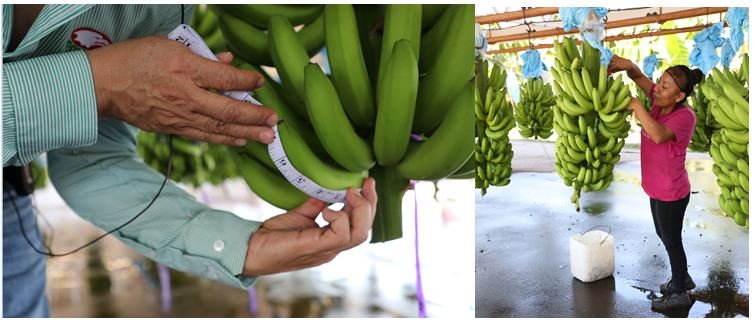
FAIR TRADE BANANA PREMIUM IN ACTION-EVERY PURCHASE MATTERS
The staple Fairtrade Fruit, this week is all about Bananas! The U.S. is the largest importer of bananas and the demand for Organic Bananas only continues to grow. Here at Earl’s we support a better banana: we offer superior flavor, in-house conditioning to order, and daily photos so you can make the right choice. Meet Coliman Bananas, a family business.